It’s All About the Sauce
Learning the foundations behind the sauces that can completely transform a dish.
Week 2 of culinary school was all about sauce—and I quickly learned that making a good sauce is a lot more technical than simply combining ingredients in a pan.
This week, we worked with several classic sauces and learned some of the French techniques that form the foundation of professional cooking.
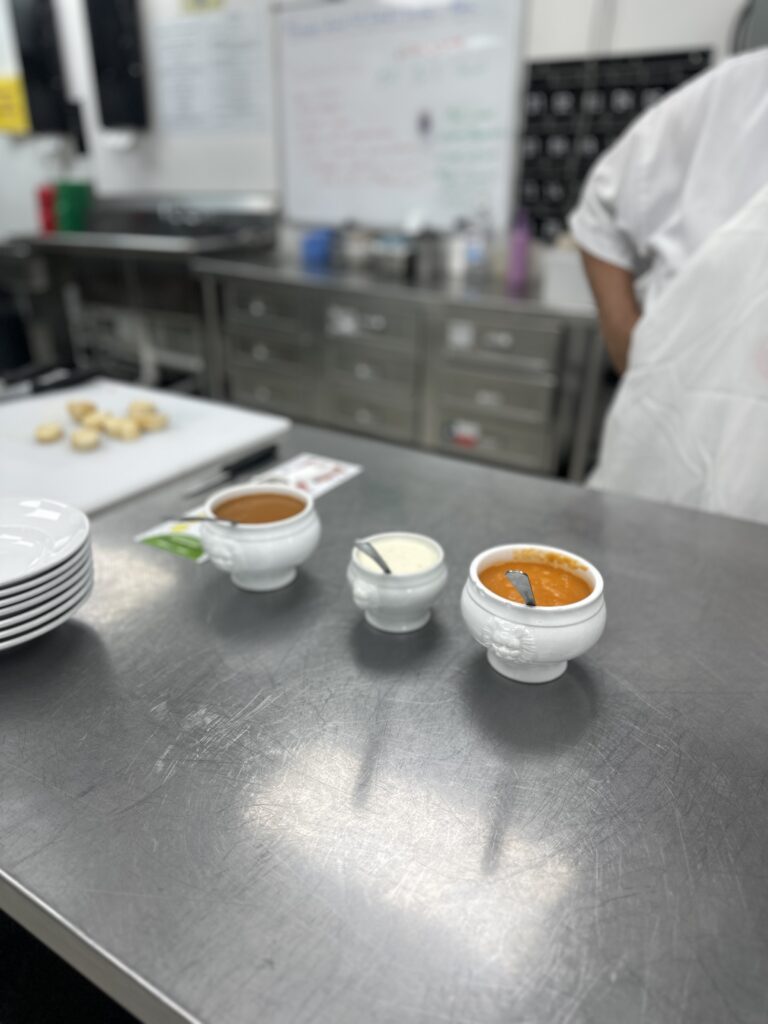
We made Espagnole Sauce, one of the classic French mother sauces. This introduced us to building flavor with a brown roux, mirepoix, tomato product, and brown stock, then allowing everything to simmer and develop before straining it for a smooth finished sauce.
We also made Sauce Suprême, a classic derivative of velouté. This was a lesson in reducing and finishing a sauce to create something smooth, rich, and balanced.
Then came homemade tomato sauce. Instead of opening a jar, we built the sauce from the beginning, layering ingredients and allowing them to slowly cook together. Once again, I was reminded how different food tastes when every part of the dish is made from scratch.
The Emulsion Challenge
One of the biggest lessons this week was learning how to make Hollandaise Sauce.
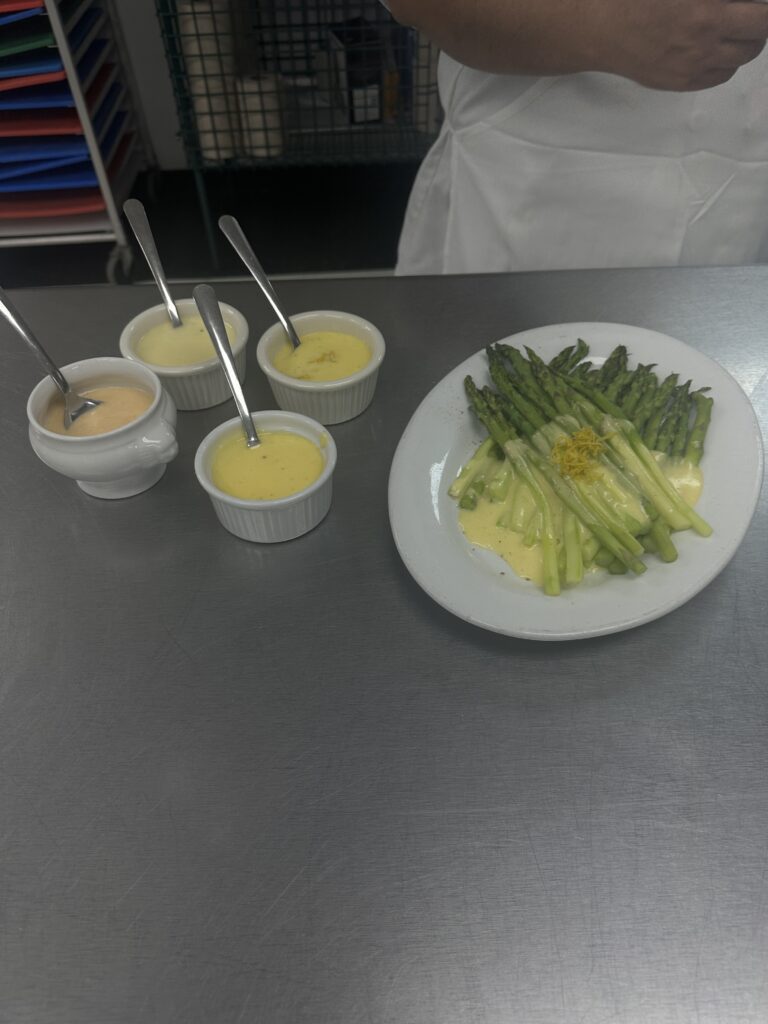
Hollandaise is an emulsified sauce, which means you’re bringing together ingredients that naturally want to separate. We learned to carefully whisk egg yolks while controlling the temperature and gradually incorporating clarified butter.
Too much heat and the eggs can scramble.
Add the butter too quickly and the sauce can break.
It definitely takes patience.
That same technique became the foundation for some of the other sauces we made.
We prepared Sauce Béarnaise, a derivative of Hollandaise flavored with a reduction traditionally made with vinegar, shallots, tarragon, and other aromatics. From there, we made Sauce Choron, which takes Béarnaise in another direction by adding tomato.
Seeing one foundational technique turn into several completely different sauces helped me understand why learning the classics is so important.
Putting the Sauces to Work
We didn’t just make bowls of sauce—we also learned how to use them as part of finished dishes.
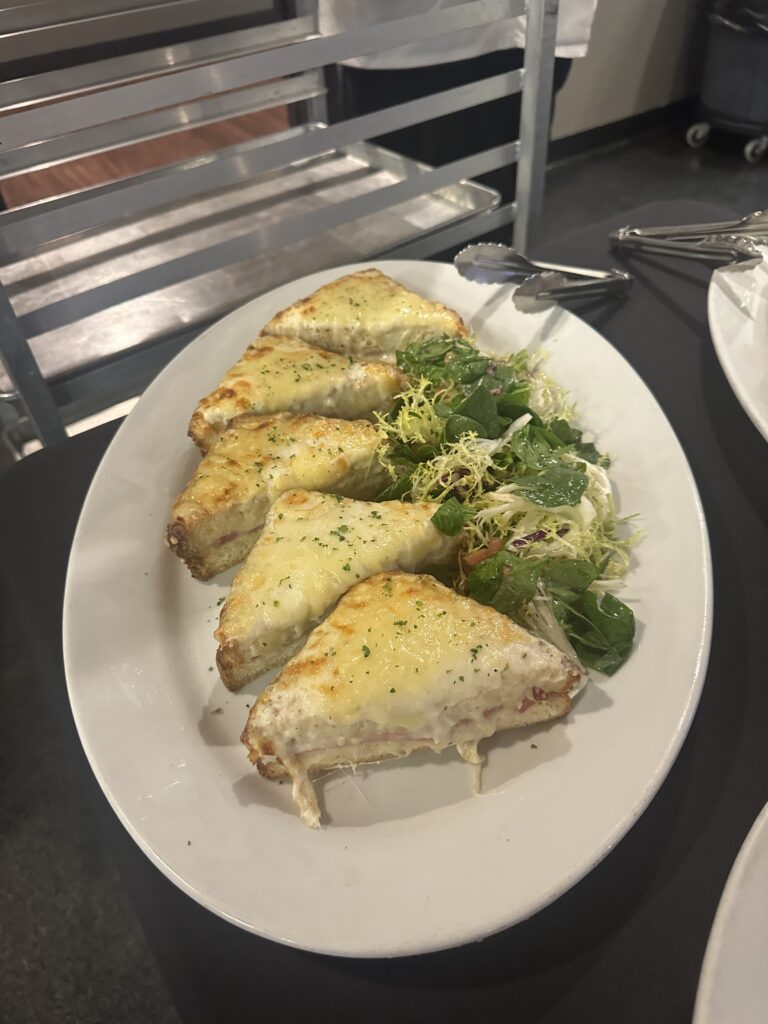
One of those dishes was Croque Monsieur, the classic French ham-and-cheese sandwich. It’s definitely not your average ham and cheese. The combination of bread, ham, cheese, sauce, and browning creates layers of flavor and texture from something that sounds incredibly simple.
We also prepared Asparagus Maltaise, pairing asparagus with Sauce Maltaise, a variation of Hollandaise traditionally flavored with blood orange.
That dish really showed how a properly made sauce can take a simple vegetable and completely change the experience.
More Than Just Sauce
The biggest thing I took away from Week 2 wasn’t memorizing six different recipes.
It was learning the techniques behind them.
Making a roux. Building a sauce from stock. Reducing. Straining. Emulsifying. Controlling temperature. Whisking. Finishing with butter or cream. Learning how one mother sauce can become the foundation for several others.
I’m starting to see that culinary school isn’t just about learning what to cook.
It’s about understanding why certain techniques work so that eventually I can use those foundations to create something of my own.
Week 2 taught me one thing for sure:
Sometimes, it’s all about the sauce