Turns out, I don’t dislike vegetables—I just needed them cooked the right way.
Going into Week 4, I wasn’t exactly excited when I heard it was Vegetable Week. I’ve never been a big vegetable person, so a full week of cooking and tasting vegetables didn’t sound like it was going to be my favorite.
By the end of the week, though, I had to admit something I wasn’t expecting:
I actually like vegetables.
Apparently, I just needed to learn how to cook them.
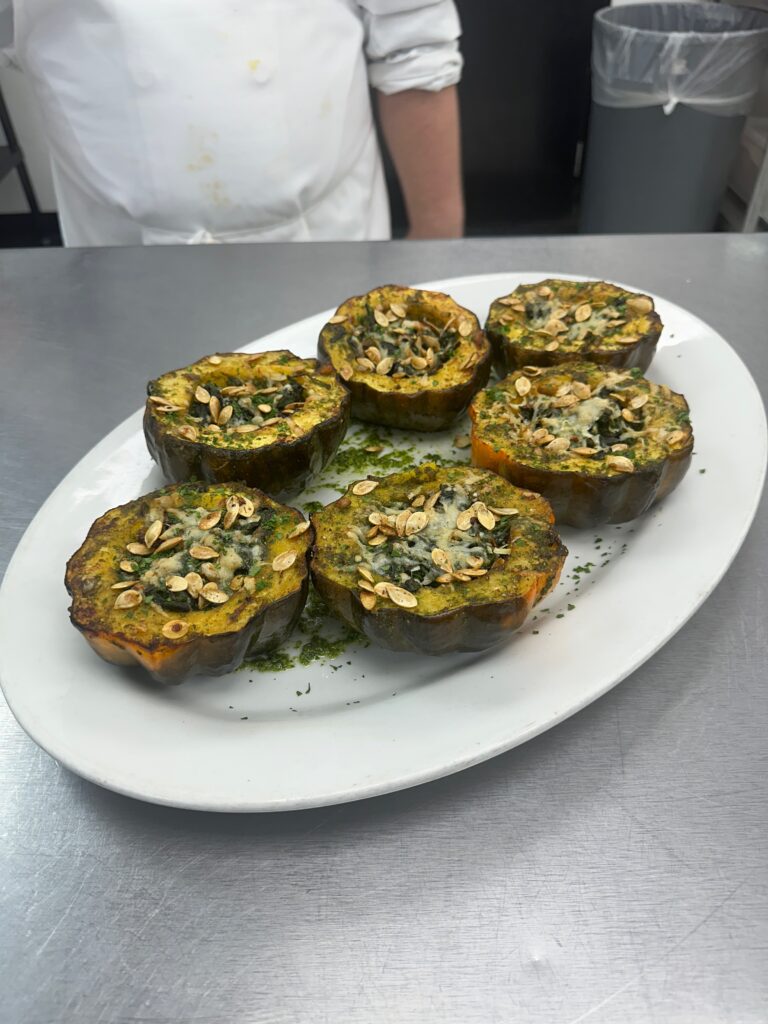
Stuffed Acorn Squash
One of the dishes I made was acorn squash stuffed with tomatoes, spinach, and pesto.
Roasting the squash brought out its natural sweetness and gave it a soft texture, while the tomatoes and spinach added freshness and the pesto brought everything together with a lot of flavor.
This was one of those dishes that made me realize vegetables don’t have to feel like something you eat just because you’re supposed to. With the right ingredients and technique, they can actually be the main part of the dish.
Green Bean Fagot & Glazed Beets
We also prepared a green bean fagot, which focused not only on properly cooking the green beans but also on presentation. Bundling the vegetables together created a much more refined look on the plate and showed how even a simple vegetable can become part of an elegant presentation.
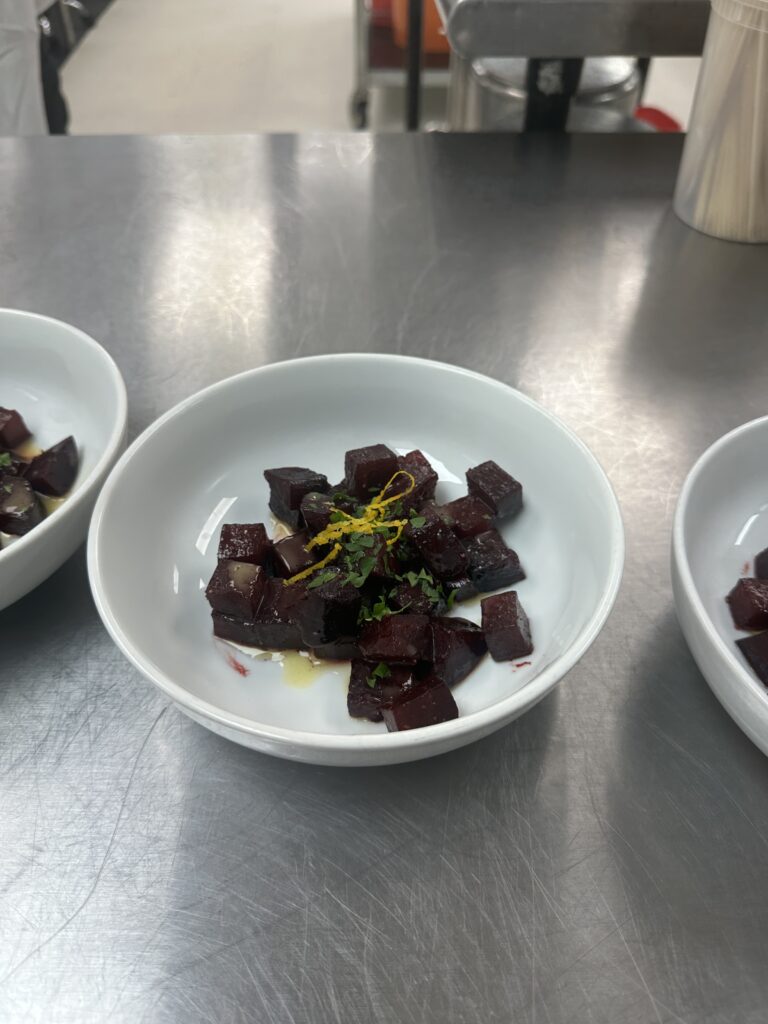
Then we made glazed beets. Glazing gave us a chance to work with controlling heat and reducing liquid until the vegetables developed a glossy coating and concentrated flavor.
Beets definitely weren’t something I would have normally chosen for myself, but this week was all about trying things outside of what I usually eat.
Roasted Root Vegetables with Pistou
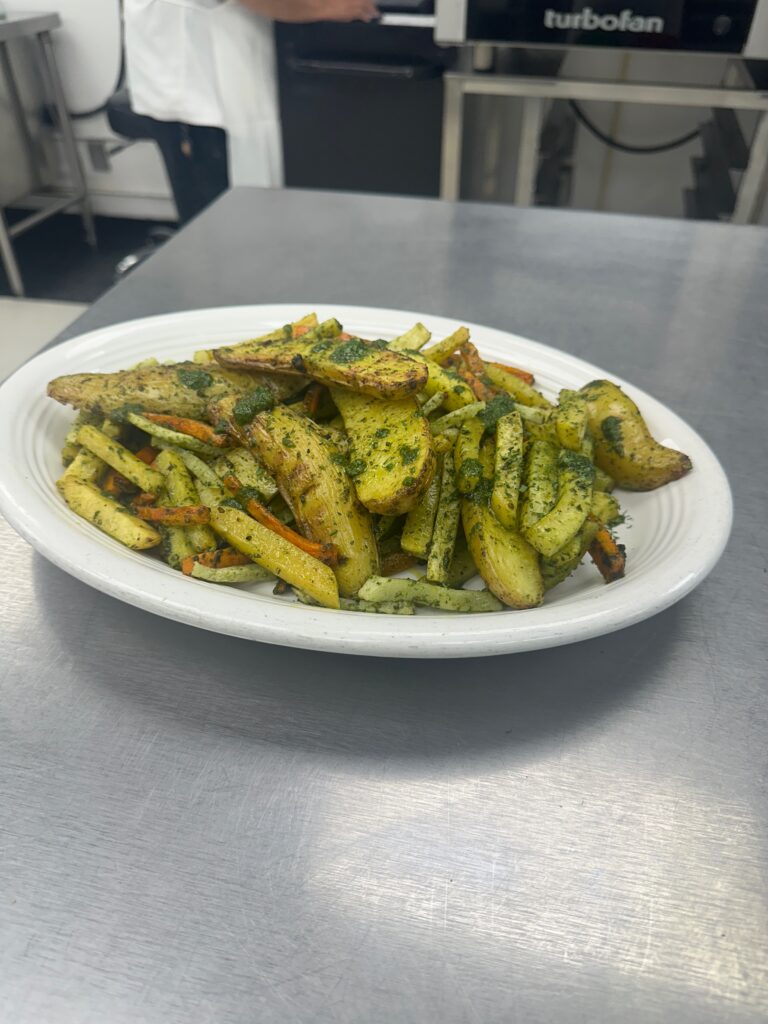
We prepared roasted root vegetables with pistou, using roasting to caramelize the vegetables and bring out their natural sweetness.
The pistou, a Provençal sauce traditionally made with ingredients such as basil, garlic, and olive oil, added a fresh, herbaceous flavor that balanced the richness of the roasted vegetables.
This was another example of how sauces and seasonings can completely change the way a vegetable tastes.
Stir-Fried Vegetables
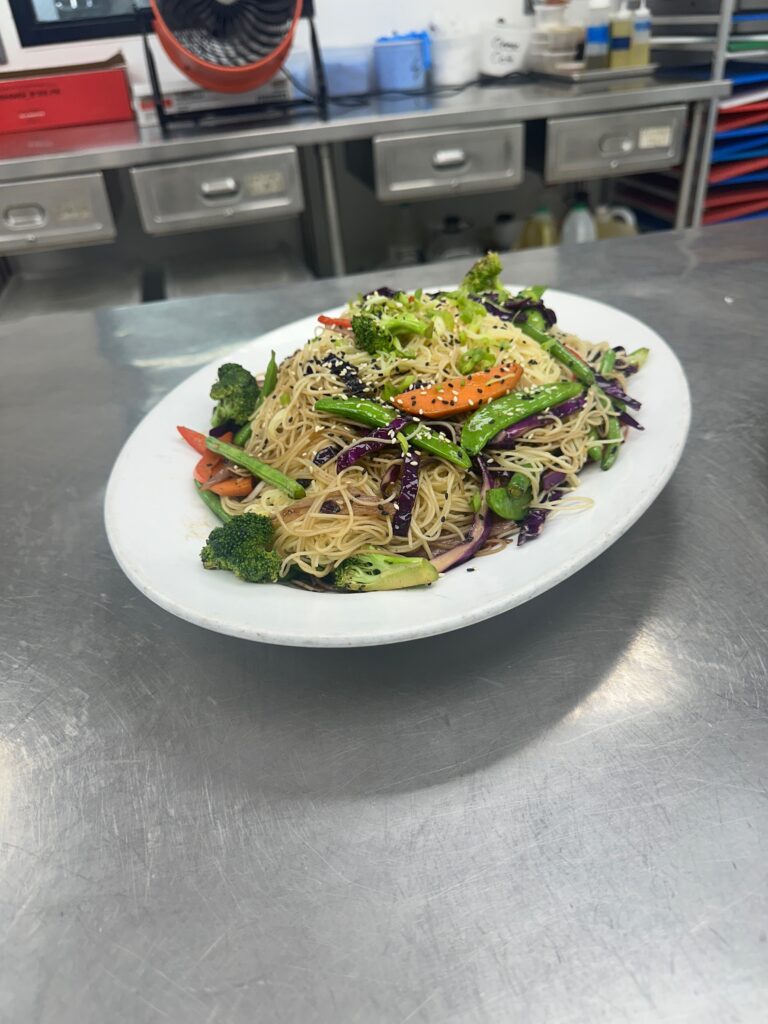
Our stir-fried vegetables gave us practice with a completely different cooking method.
Stir-frying uses high heat and quick cooking, so everything has to be prepared before you start. The vegetables need to be cut appropriately and added at the right time so they cook evenly while still keeping their color and texture.
It was a good lesson in timing and mise en place because once that pan gets hot, there isn’t much time to stop and prepare something you forgot.
Ratatouille Provençale
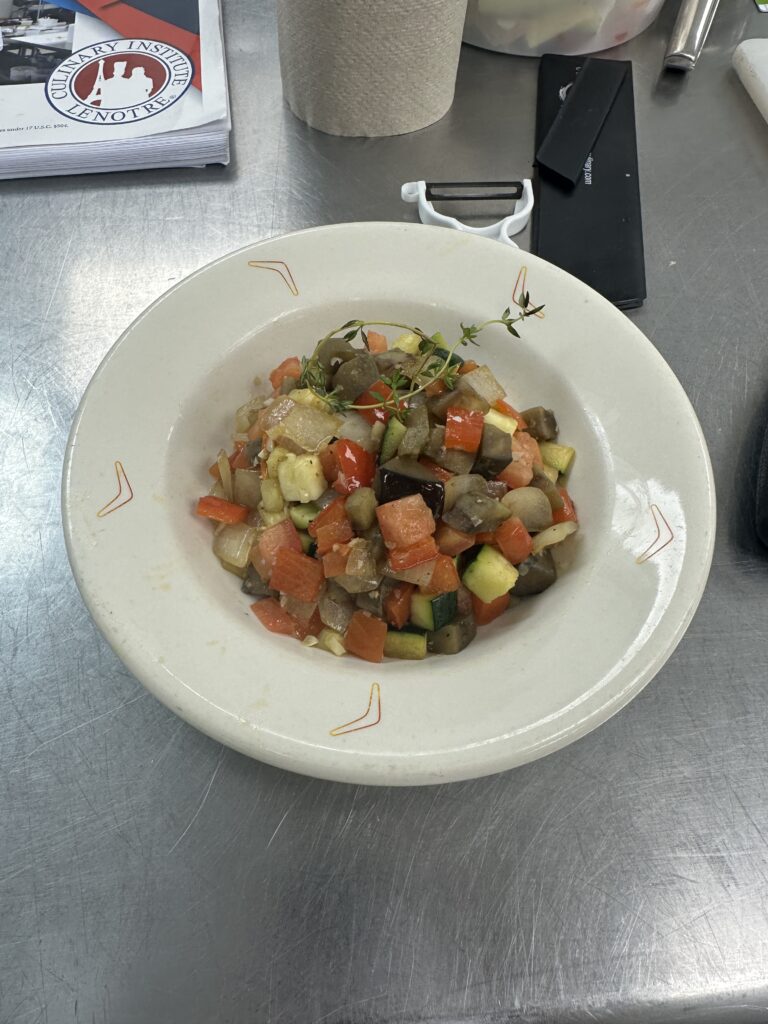
We also made Ratatouille Provençale, a classic French vegetable dish.
Ratatouille brings several vegetables together, traditionally including ingredients such as eggplant, zucchini, peppers, onions, and tomatoes. The goal isn’t simply to throw everything into a pot. Each ingredient needs to be cooked properly so the finished dish develops flavor without all of the vegetables turning into one texture.
It was another reminder that vegetable cookery requires just as much attention to technique as meat or sauce.
Vegetable Tian
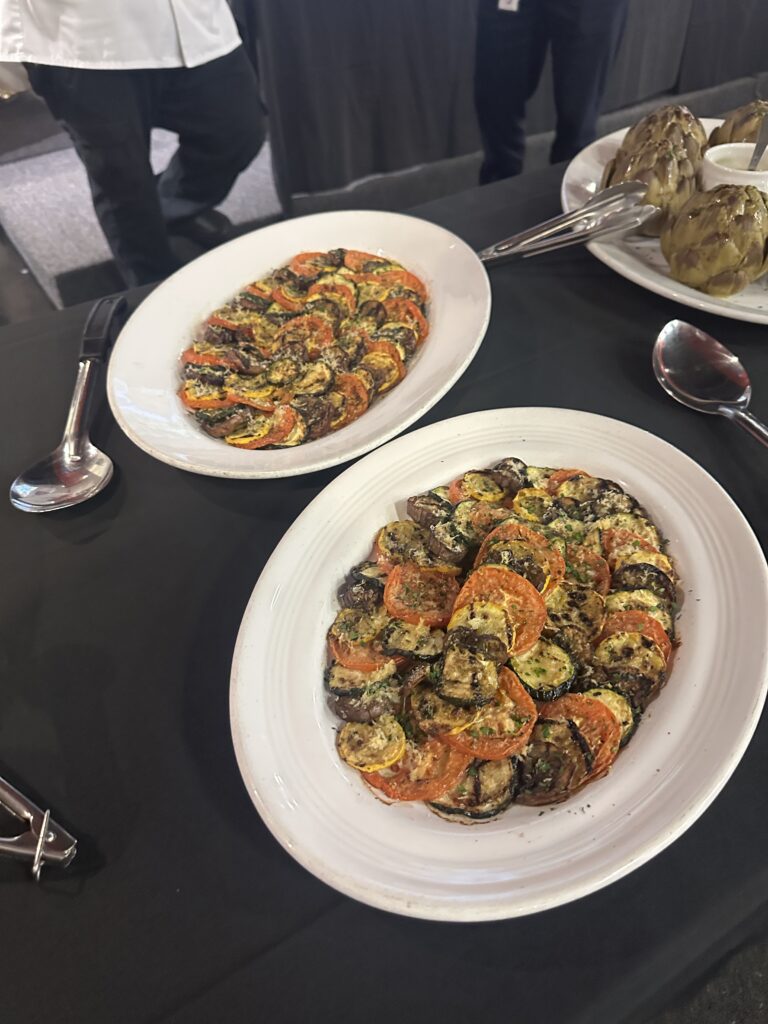
The Vegetable Tian may have been one of the best examples of how presentation can transform simple ingredients.
The vegetables are carefully arranged, usually in overlapping layers, before being seasoned and baked. Instead of looking like a pile of vegetables on a plate, the finished dish becomes colorful, organized, and intentional.
We’re learning that people eat with their eyes first, and this dish definitely proved it.
Vegetable Tempura
Then came vegetable tempura, and I’m not going to lie—putting vegetables in a light, crispy batter definitely helped my relationship with vegetables.
Tempura taught us about batter consistency, oil temperature, and frying technique. The goal is a coating that’s light and crisp, not thick, greasy, or heavy.
Controlling the temperature of the oil was especially important. If it’s too cool, the food absorbs too much oil. Too hot, and the outside cooks before the vegetable inside is ready.
Steamed Artichokes with French Vinaigrette
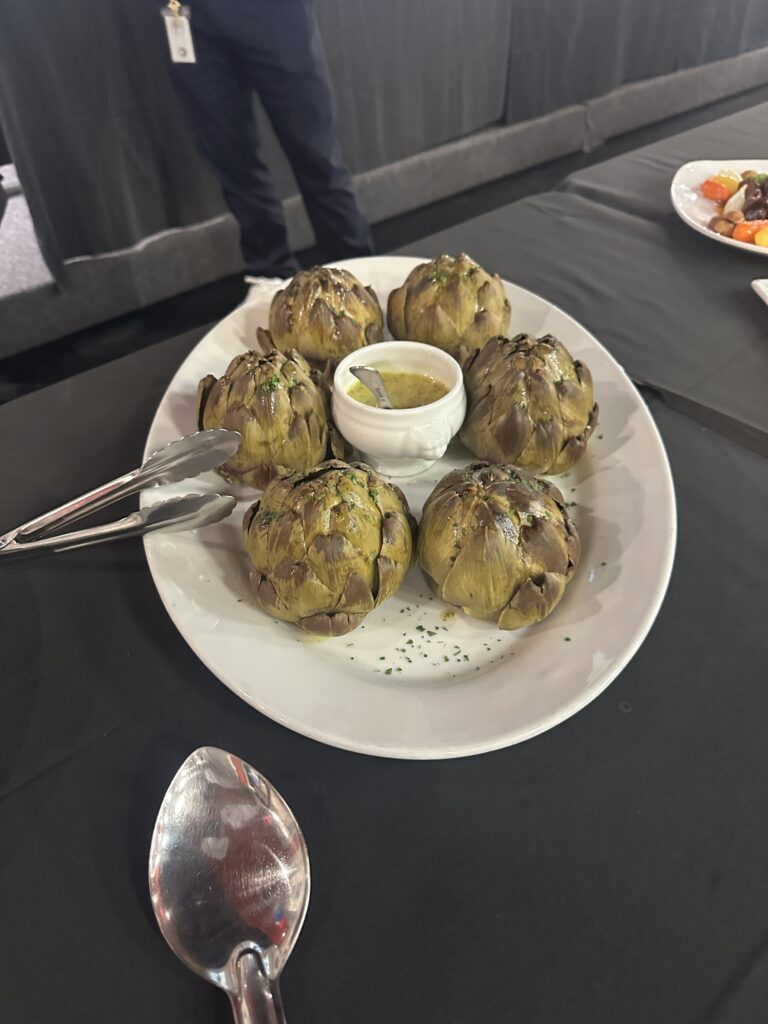
We finished with steamed artichokes served with a French vinaigrette.
Artichokes require quite a bit of preparation before they’re even ready to cook, so this dish gave us practice with trimming, steaming, and understanding how to work with an ingredient that isn’t necessarily straightforward.
The acidity of the vinaigrette paired with the artichoke and showed, once again, how the right sauce or dressing can completely change an ingredient.
Maybe I Don’t Hate Vegetables After All
The biggest surprise of Week 4 wasn’t learning a new cooking technique.
It was learning something about my own taste.
I’ve always said that I don’t like vegetables. But this week I roasted them, glazed them, steamed them, stir-fried them, fried them in tempura batter, paired them with pesto and pistou, arranged them into a tian, and tasted them in dishes I probably never would have ordered on my own.
And I liked them.
This week showed me that sometimes it isn’t necessarily the ingredient you dislike. It might be how you’ve experienced that ingredient before.
Learning how different cooking methods affect flavor, texture, color, and even sweetness completely changed the way I looked at vegetables.
That’s one of the things I’m beginning to appreciate most about culinary school. I’m not only learning how to cook food—I’m learning to experience food differently.
Four weeks in, and culinary school has already gotten me to say something I never expected:
I like vegetables.